Featured guide · 11 min read
Decision Models: History, Evolution and Practical Uses
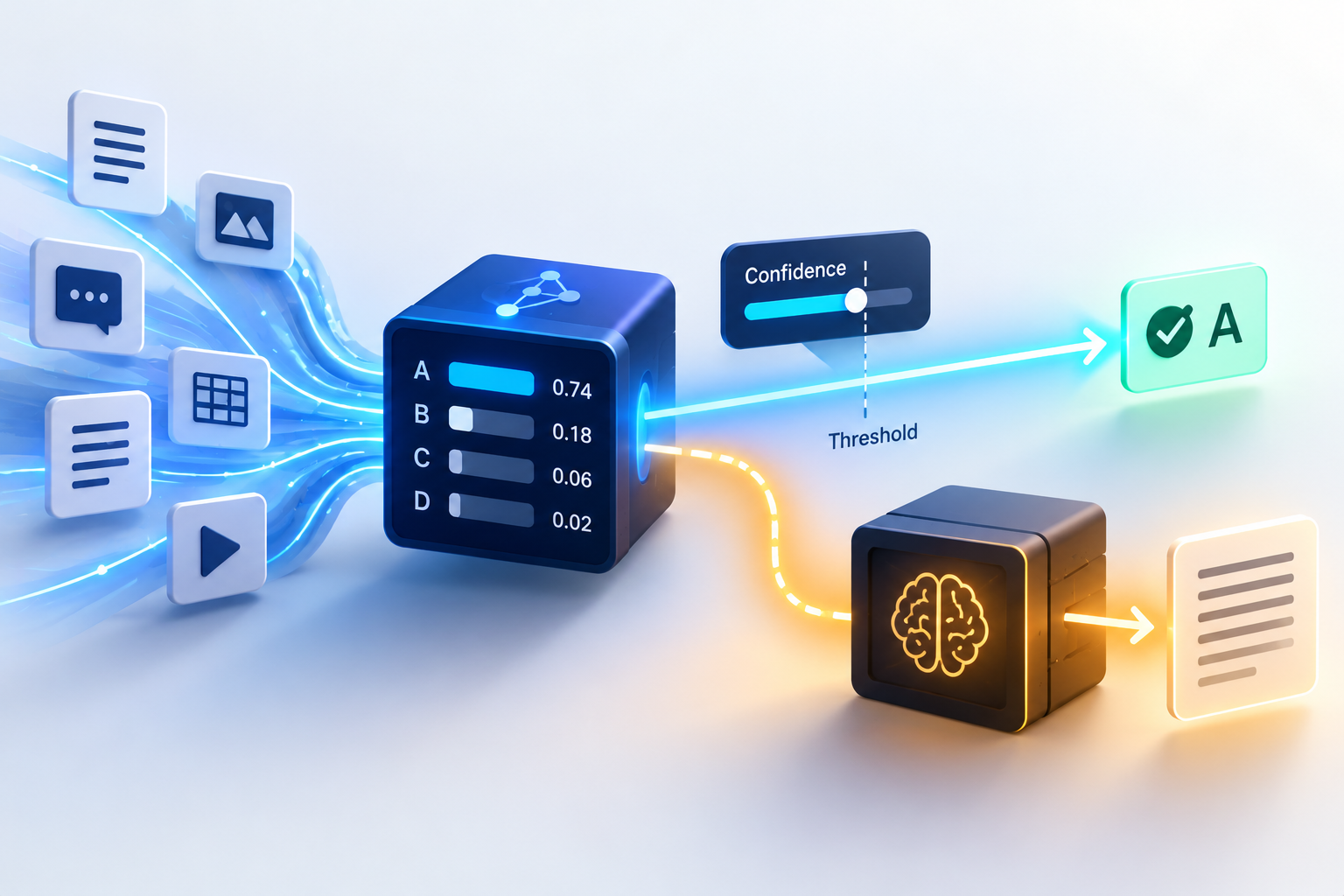
Learn how decision models return typed answers, how the category developed, and how to use confidence safely in software workflows.
Read the free guideFree learning from jnaapti
From AI ideas to systems you can run. Explore practical guides to Kubernetes, DevOps and software—at your pace, without a sign-in.
Featured guide · 11 min read
Learn how decision models return typed answers, how the category developed, and how to use confidence safely in software workflows.
Read the free guideRead these guides in order.
Reading path · 2 articles
Explore machine learning, generative AI and decision models.
Reading path · 3 articles
Run a container, understand orchestration, then build a local cluster.
Reading path · 3 articles
Follow software from delivery to architecture and observability.
35 articles · reading times are estimates
35 articles
Clear filtersTry a broader search or choose another topic.
Explore decision models, their history and safe use in software workflows through a simple conversation.
Move recurring tasks into event-driven workflows with explicit approvals, durable state and safe recovery.
Trace the journey from machine learning to generative AI and foundation models.
Learn how engineering, AI and understanding people's work help us build solutions that matter.
Create a local Kubernetes cluster and deploy an application.
Understand how Kubernetes manages containers, networking and storage at scale.
Create service accounts and restrict access with Kubernetes RBAC.
Use logs, traces and metrics to understand distributed application behavior.
Run Cassandra in Docker and create, populate and query a table.
Explore NATS architecture, installation and clustering for messaging systems.
Practise the Linux file, process and network commands used in microservices work.
Explore service boundaries, scalability and the trade-offs of distributed systems.
Understand primitive values, dynamic typing and template literals.
Pass and return functions, build data pipelines and use closures.
Learn function syntax, scope, hoisting and parameter handling.
Understand this, prototypes and constructor functions through examples.
Work through Python values, variables, operators, conditionals and loops.
Understand network types and how containers communicate.
Install Docker, set up permissions and run your first container.
Explore layered filesystems and how they relate to Docker storage.
Understand what programming languages do and how to approach learning one.
Compare different approaches to solving programming problems.
See how computers represent and process information as bits.
Build reusable class libraries and use them in a console application.
Use async/await for non-blocking code and yield return for lazy evaluation.
Explore value and reference types, collections, generics and nullable types.
Use delegates and lambdas for event handling and data transformations.
Set up .NET and VS Code, then run your first console application.
Organize namespaces, classes and source files for clearer C# projects.
Understand how CPUs, memory and storage turn inputs into outputs.
Explore language, grammar and their relationship to AI.
Connect concepts, technologies and applications in your engineering learning.
Follow software from an idea through development, delivery and operations.
Run Python in a browser and connect it to web-page interactions.
Write, compile and run WebAssembly in browsers and other runtimes.